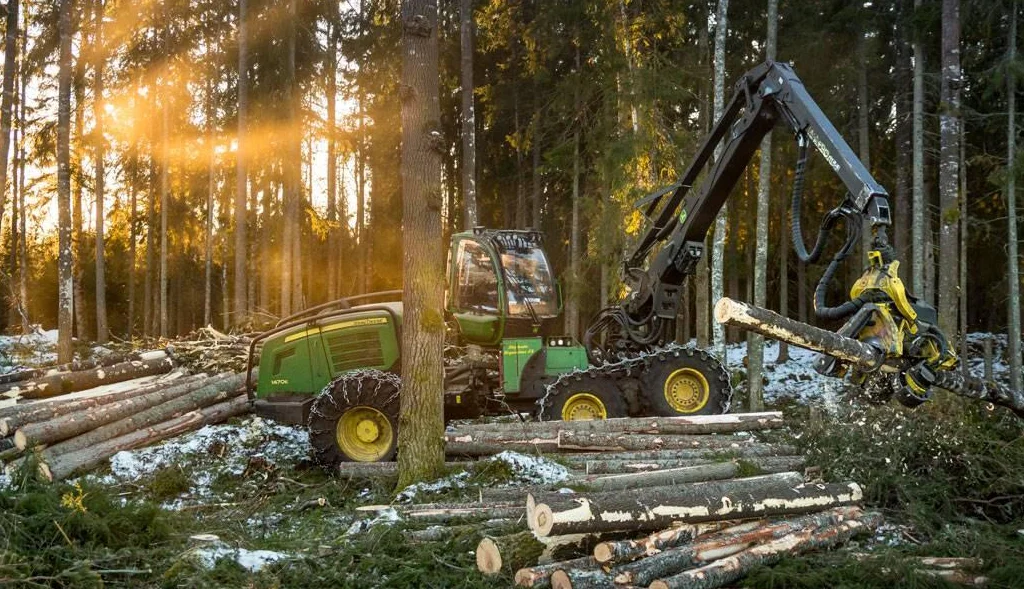
A new impact assessment examining proposals for more restrictive forestry policies in Sweden concludes that measures such as reduced harvesting levels, increased forest conservation and wider adoption of continuous-cover forestry could have significant economic consequences while delivering only limited climate benefits.
The study was carried out by forestry researcher Tomas Thuresson, former Head of Silviculture at the Swedish Forest Agency, together with Runar Brännlund, Professor Emeritus of Economics at the Centre for Environmental and Resource Economics (CERE) at Umeå University.
The report was commissioned by SCA
The analysis evaluates several policy options currently being discussed within the context of evolving European forest policies, including reduced harvesting, additional protected forest areas and the broader implementation of so-called “Closer to Nature” forestry practices, which rely more heavily on continuous-cover forestry methods rather than conventional regeneration systems.
According to Jonas Mårtensson, Business Area Manager at SCA Forest, the report highlights both the climate and economic value generated by active forest management. “Actively managed forests generate enormous benefits, both economically and for the climate. The fundamental principle is to harvest mature forests and replace them with new forests that can continue absorbing carbon dioxide. This also forms the basis for renewable products that replace concrete, steel, plastics, and other emission-intensive materials,” he said.
Mårtensson argued that forestry contributes not only to climate mitigation but also to employment, investment, exports and tax revenues, warning against policies that focus on what he described as overly simplistic solutions.
Significant impact on production and employment
The report concludes that reductions in harvesting would directly affect forest raw material production and economic output. According to the analysis, a 15% reduction in harvesting would result in a similar decline in production volumes and economic value generation.
The largest effects are associated with the “Closer to Nature” scenario examined by the researchers. Under this model, half of Sweden’s managed forests would be converted to continuous-cover forestry while larger areas would be withdrawn from production for natural development. The study estimates that such a scenario could reduce harvesting volumes by 25–30% and lower sawlog availability by 30–40% over several decades. As a consequence, between 25,000 and 35,000 jobs could be lost, while value added across the forestry sector could decline by as much as one-third.
“Restricting Swedish forestry is a costly illusion that in practice leads to leakage to other countries, a weaker economy, fewer jobs, and a reduced climate contribution,” said Tomas Thuresson.
Researchers question climate effectiveness
A key focus of the report is the climate impact of reduced forestry activity. The researchers acknowledge that lower harvesting levels may temporarily increase carbon storage in standing forests. However, they argue that over time forest growth rates decline, reducing overall carbon sequestration both in forests and in wood-based products.
The study also emphasises the role of substitution effects. Wood products used in construction, packaging and energy applications can replace more carbon-intensive materials and fossil-based alternatives. Reduced wood availability, according to the authors, would therefore diminish these climate benefits.
Another concern highlighted in the report is carbon leakage. If demand for forest products remains unchanged while Swedish production declines, production may shift to regions with higher carbon emissions.
“The climate benefits of these measures, when material substitution and carbon leakage are excluded, do not justify the costs. When carbon leakage is also taken into account, one cannot rule out the possibility that the overall climate impact becomes negative,” said Runar Brännlund.
Consequences beyond forestry
The report argues that the effects would extend beyond the forestry sector itself. Forest biomass currently provides nearly 40% of Sweden’s total energy consumption. A reduction in biomass availability could therefore affect energy supply systems, particularly district heating networks that rely heavily on forest-based fuels.
The researchers also estimate that the societal cost of increasing protected forest areas is substantial, suggesting that additional conservation measures may involve costs significantly exceeding the value of the land itself. The report concludes that Sweden can maximise climate benefits through active forest management combined with continued innovation in renewable, resource-efficient forest products.
“If the goal is to achieve genuine climate benefits – that is, global emissions reductions rather than merely reductions in national emissions – the focus should be on active Swedish forestry and the continued development of the Swedish forest industry. This would ensure both increased climate benefits and higher employment in Sweden,” Brännlund said.