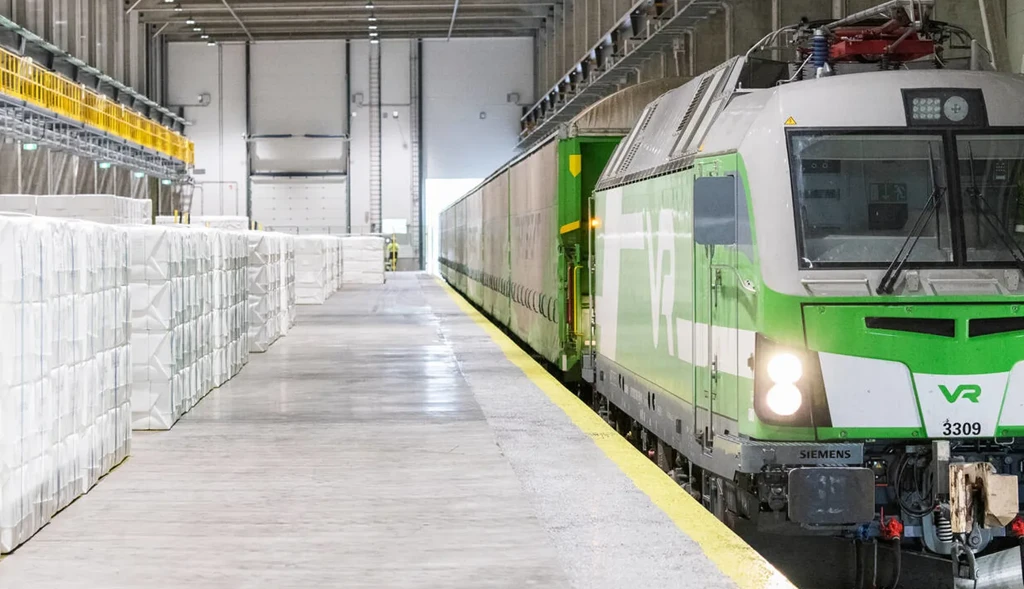
Metsä Fibre is intensifying efforts to reduce emissions throughout its logistics chain, with a target of lowering logistics-related emissions by 30% per tonne-kilometre by 2030 compared with 2022 levels. The objective forms part of Metsä Group’s broader climate strategy and influences operational decisions across transportation, warehousing and supply chain partnerships.
According to Erja Karjalainen, Director of Customer Service at Metsä Fibre, achieving the target requires a comprehensive approach covering the entire logistics network. “Reducing logistics emissions is a key way for us to lower the climate impact of our operations. At the same time, we improve supply chain efficiency and respond to our customers’ growing sustainability expectations,” Karjalainen said.
The company works closely with customers and logistics partners to optimize transport solutions, prioritising full loads, reducing unnecessary journeys and increasing the use of lower-emission transportation methods.
One of the most important measures is the expansion of rail transportation. Whenever delivery schedules and routes allow, rail transport is selected instead of road transport due to its substantially lower emissions per tonne-kilometre.
“Emissions from rail transport per thousand kilometres are significantly lower than those from road transport, so the impact on overall emissions is substantial. This is particularly important in domestic logistics within Finland and in the transport of finished pulp from mills to ports,” Karjalainen explained.
Metsä Fibre has also developed a global warehouse and port network that reduces the need for long-distance truck transportation by positioning products closer to customers. “For example, in Europe, delivery from a local port warehouse significantly reduces the need for road transport compared with delivering all the way from Finland by lorry,” she added.
The company systematically monitors logistics emissions by transport mode, route and supplier, while also tracking emission intensity per tonne-kilometre to support data-driven decision making.
Partnerships continue to play a central role in emission reduction efforts. Metsä Group is working closely with Finnish railway operator VR to cut rail transport emissions by 50% by 2030 through increased electrification, improved train concepts and the wider use of bio-based fuels.
“Electrifying the rail network is a goal that no single operator can achieve alone, but through cooperation we have been able to make progress. For example, pulp transports from our Äänekoski bioproduct mill to the Port of Vuosaari are carried entirely by electric trains,” said Veli-Matti Passinen, VP Logistics at Metsä Group.
The cooperation with VR is estimated to reduce emissions by up to 14,000 tonnes of CO₂ equivalent annually, corresponding to more than 25,000 truck journeys.
Maritime transport remains the largest source of logistics emissions, accounting for nearly 90% of Metsä Fibre’s logistics-related carbon footprint. To address this, the company is working with Dutch shipping company Royal Wagenborg to improve vessel efficiency, optimize routes and cargo utilisation, and reduce fuel consumption.
“There are currently many changes in maritime transport that encourage emission reductions. Development is driven by EU regulation and blending mandates for biofuels. At the same time, customer expectations regarding sustainability and emission reductions within their own supply chains are increasing,” Passinen noted. “Together with the shipping company, we have been able to optimise fuel consumption, for example by no longer sailing at full speed to a port to wait. Instead, speed is adjusted to the schedule so that the vessel arrives at exactly the right time to start loading or unloading.”
The company has also improved cargo utilisation rates by combining different Metsä Group products in the same shipments, including pulp, paperboard and Kerto® LVL products. Further logistics developments have been implemented in North America. Metsä Fibre recently added Green Bay to its network of US ports, allowing certain pulp shipments previously routed through Baltimore and then transported by road to be delivered more efficiently.
“We started using this route in 2024, and it has proven effective. We also have local product warehouses that help ensure reliable, up-to-date and fast deliveries to our customers. At the same time, we have been able to reduce emissions and improve our service capability,” Passinen said.
Reducing logistics emissions not only supports environmental targets but also improves delivery reliability, operational efficiency and customer service performance across global markets.