
The hygiene paper industry is undergoing a profound transformation. Stricter regulations, growing societal demands for sustainability and rising raw material costs are putting increasing pressure on manufacturers. While the focus has long been on fiber selection and energy management, Henkel is among the companies highlighting the role of auxiliary materials such as adhesives, which are now moving into the spotlight – offering untapped potential for increasing resource efficiency and reducing CO2. Modern adhesives are much more than simple binders. They can actively contribute to the circular economy by containing a high proportion of recycled materials and significantly reducing the use of fossil-based resources.

Innovative formulations also allow for flexible adaptation to various paper qualities, including those with a high percentage of recycled fibers. As a result, production processes become more sustainable, efficient and safe.
A current example of this development is Henkel’s new laminating adhesive, Aquence LAM E2050 LE. This product contains at least 35% repurposed solid content, chemically virgin raw materials from Henkel’s own manufacturing processes. The outcome: a demonstrable reduction in the adhesive’s carbon footprint of up to 43% compared to conventional laminating adhesives, when measured from raw material sourcing to the factory gate (“cradle-to-gate”).
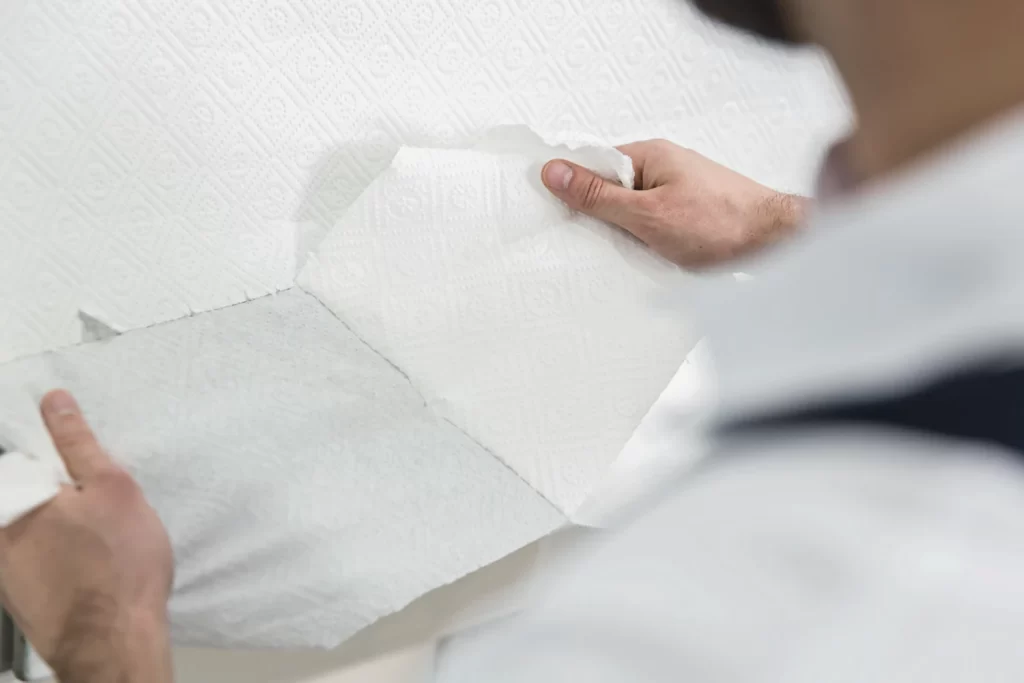
Aquence LAM E2050 LE provides excellent adhesion even on challenging papers. It is free from preservatives, approved for food contact, and can be processed without additional protective measures. This innovative adhesive is designed for seamless integration into existing production lines, supporting high-speed operations and enabling precise adjustments depending on the number of paper layers – whether two, three or four.
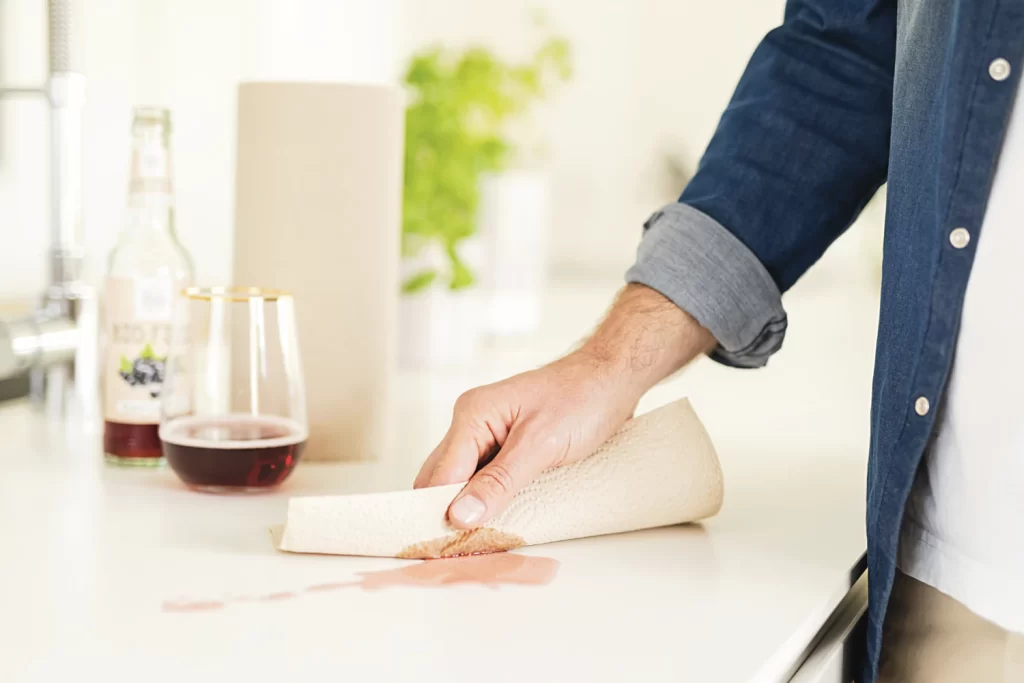
This flexibility allows manufacturers to optimize machine speed, reduce energy consumption, and achieve specific product qualities such as enhanced tissue volume or superior softness. Field tests have shown that product performance and end-user experience remain consistent even when using high proportions of recycled fibers.
Using such adhesives offers companies more than just a “green image.” Reducing fossil-based resources and transitioning to a closed-loop approach lowers raw material expenses and minimizes waste disposal costs.
Optimized processing reduces energy consumption and improves overall efficiency, contributing to additional savings.
High process reliability and flexibility make it easy to integrate these adhesives into existing production lines without major adjustments.
Furthermore, by proactively meeting current and future regulatory requirements, businesses can avoid costly retrofits or supply chain disruptions down the line while gaining crucial planning security, which supports long-term operational and strategic planning.
The transformation of the hygiene paper industry is already underway. Investing in innovative adhesive technologies can help companies strengthen their sustainability efforts while optimizing production. Companies looking to shape the future can take a significant step toward sustainable production and long-term success by testing Aquence LAM E2050 LE.