Eldorado Brasil has published the latest editions of its Sustainability Report and Forest Management Plan, outlining advances in governance, environmental conservation, innovation and responsible forest management. The documents reinforce the company’s commitment to integrating ESG principles into its long-term business strategy and operational development.
The reports present results achieved across areas such as traceability, circular economy, biodiversity conservation, social responsibility, people development and technological innovation. They also include data from the first year of activity at ELDTECH, the company’s Forest Technology Center, which is focused on biodiversity research, climate adaptation and the development of technologies aimed at increasing the efficiency and resilience of forestry operations.
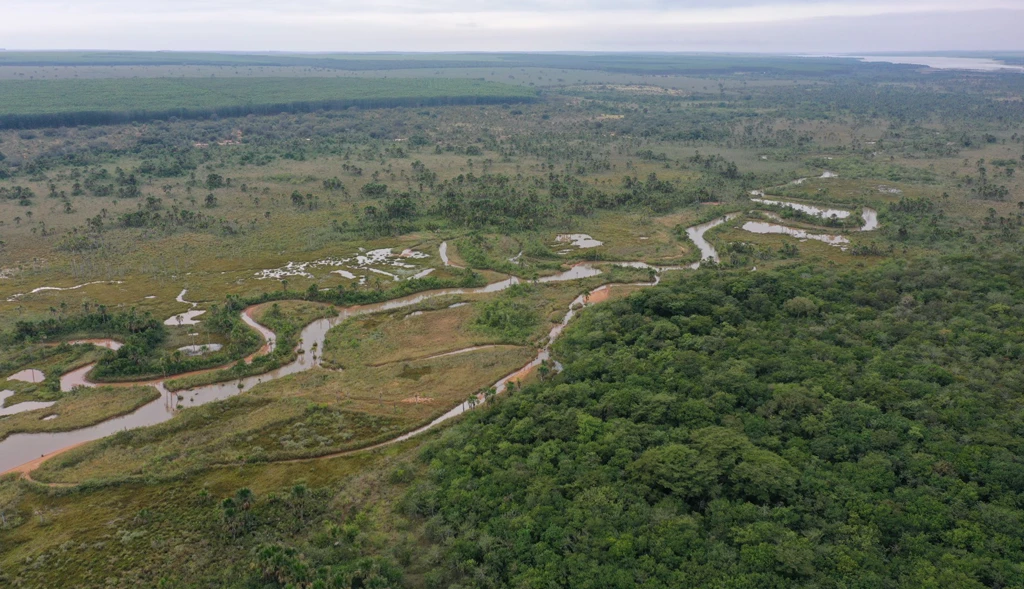
Eldorado currently manages a forestry base covering approximately 456,000 hectares in the Brazilian state of Mato Grosso do Sul. Of this total, more than 309,000 hectares are dedicated to productive forests, while around 106,000 hectares are permanently allocated to environmental conservation.
The company’s forest management practices recently received FSC® Ecosystem Services Procedure Verification, an international recognition that validates positive contributions to biodiversity conservation, carbon sequestration and water resource protection.
Forestry activities continue to play an important role in regional development. According to the company, its forestry operations generate more than 3,000 direct jobs and support a range of initiatives aimed at sustainable agriculture, income generation and environmental awareness within local communities.
Research and innovation remain key pillars of Eldorado’s strategy. ELDTECH, located in Andradina, São Paulo, serves as the company’s main innovation hub and includes laboratories dedicated to precision tree breeding, wood quality analysis, biological pest control, biotechnology and forest protection. Eldorado has also pioneered the use of artificial neural networks for forest inventory and timber measurement, improving both operational efficiency and data accuracy.
Continuous environmental monitoring has demonstrated the effectiveness of the company’s management model, with several endangered species being regularly recorded within managed forest areas, reinforcing their role as ecological corridors that contribute to biodiversity preservation.
The Sustainability Report also highlights several initiatives designed to advance the company’s ESG agenda. Among them is the Zero Landfill program, which will be supported by a new Waste Management Center scheduled to begin operations later in 2026. The facility will transform industrial waste into agricultural inputs, further strengthening Eldorado’s circular economy approach.
The company has also introduced a Climate Risk Matrix that links environmental impacts with financial valuation and includes long-term scenario analyses extending to 2030 and 2050.
During COP30, Eldorado received the Diamond Sustainability Seal in recognition of its environmental and sustainability initiatives. The company further strengthened its governance framework by joining both the Brazilian Business Integrity Pact, coordinated by the Office of the Comptroller General (CGU), and the Sustainability Pact.
People development remains another strategic priority. Eldorado continues to invest in leadership development, employee training and talent retention initiatives, earning recognition as Brazil’s Best Human Resources Department in the forest-based sector.
“2025 marks another important step in how we integrate efficiency, competitiveness, sustainability and people management. We remain committed to transforming strategy into execution with discipline and a long-term vision,” said Elcio Trajano Jr., Human Resources, Sustainability and Communications Director at Eldorado Brasil.
The company also reported strong environmental performance indicators. Greenhouse gas emissions intensity reached just 0.17 tCO₂e per air-dried tonne (ADT) of pulp, placing Eldorado among the lowest-emission producers in the global pulp industry. In addition, a Life Cycle Assessment conducted in partnership with North Carolina State University found that the global warming potential of Eldorado’s pulp is 30.67% lower than the industry average, highlighting the environmental advantages of its products throughout their life cycle.
Eldorado Brasil closed 2025 with a strengthened position in the global forest products sector, supported by operational excellence, measurable environmental performance and governance practices aligned with international standards. The company produces 1.8 million tonnes of pulp annually and exports to more than 40 countries worldwide, while maintaining commercial offices in the United States, Austria and China.