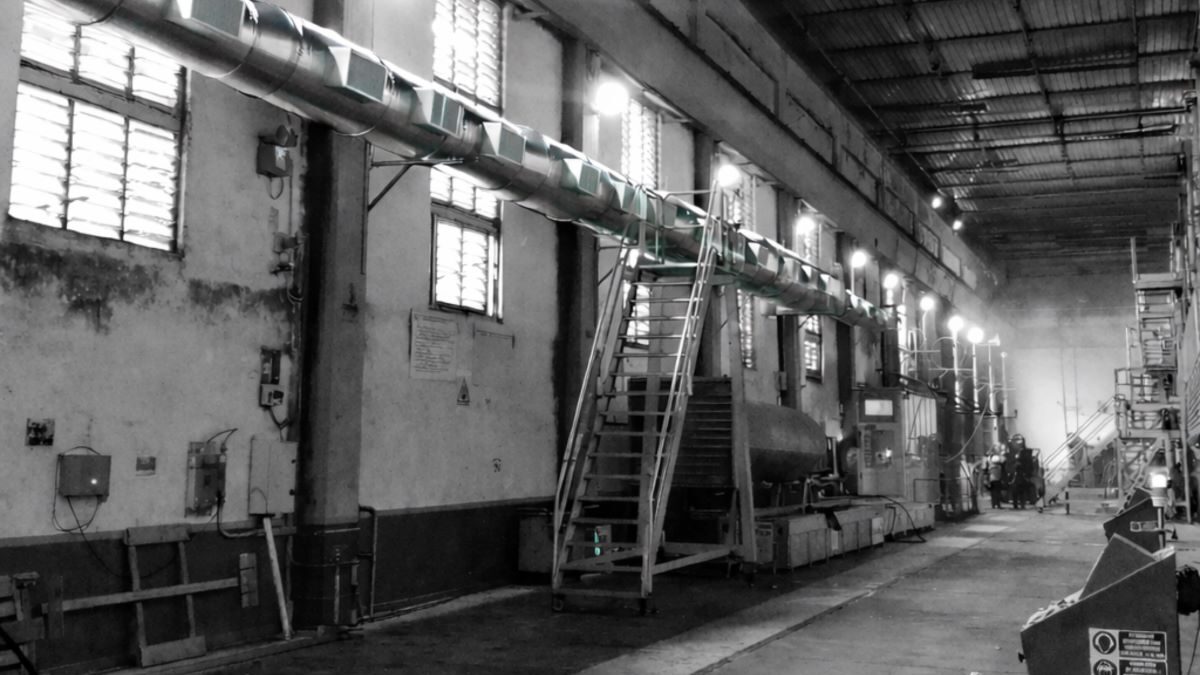
The strong correlation between machine, production characteristics, and HVS, especially in the tissue and paper industries, is the crucial reason to rely on an experienced company in the sector. You cannot expect a high-performing ventilation system without a deep understanding of the production and the specific characteristics of the machine.
At the same time, a common mistake is to consider the HVS a secondary system, simply because it does not appear related to production.
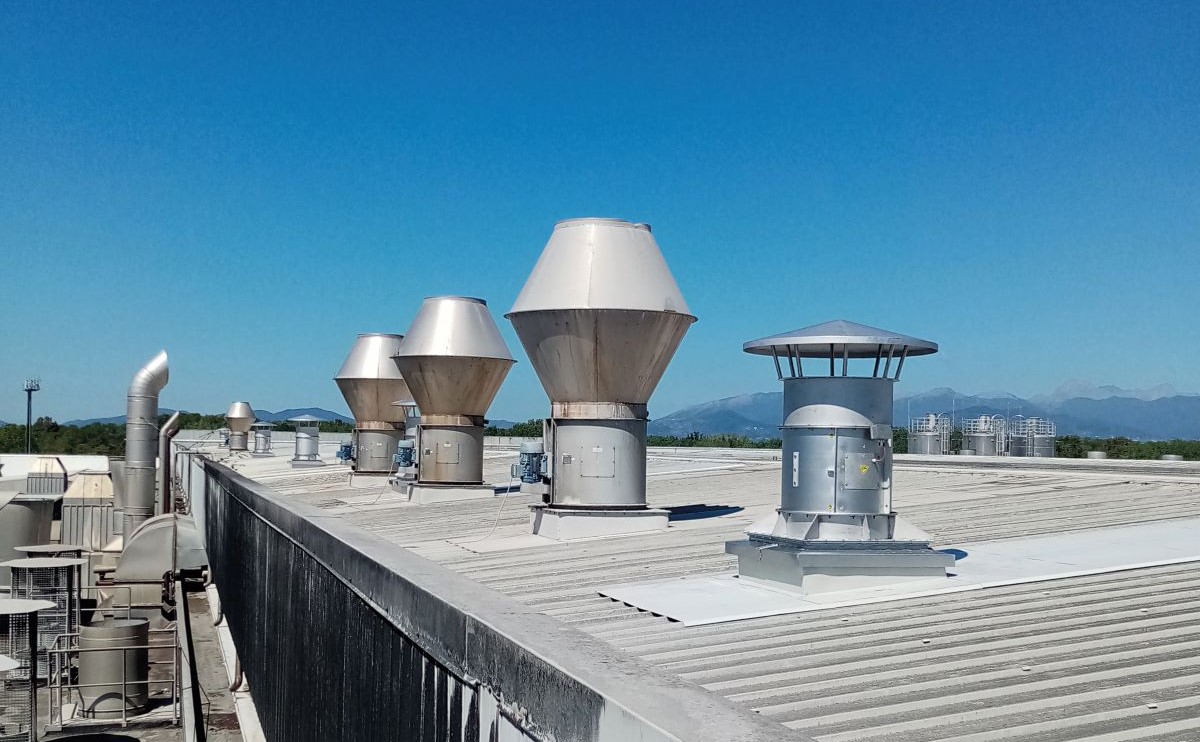
Keywords and aims
– Balance: The correct mass balance is a non-negotiable for a good ventilation system, as it allows heating the right mass flow (without external infiltrations), maintaining the optimal energy balance of the machine hall.
– Quality: It is common for the lack of a HVS (or an inadequate system) to lead to serious production quality issues. This is due to high levels of humidity all over the hall top and the movement of hotter and colder air currents which can even cause condensation on finished products.
– Safety and health: Persistent humidity issues mean a progressive deterioration of the building roof, cranes, structures, and machine components. Damaged and worn parts pose safety risk; an efficient HVS helps the mill to avoid these dangers while ensuring healthier working conditions for the operators.
– Costs: It is a paradox to define an investment a high-cost system that consumes energy (electricity and sometimes steam), but it is true. A performant HVS preserves all the machine and building components over the years, avoiding enormous out-of-budget expenses for extraordinary maintenance.
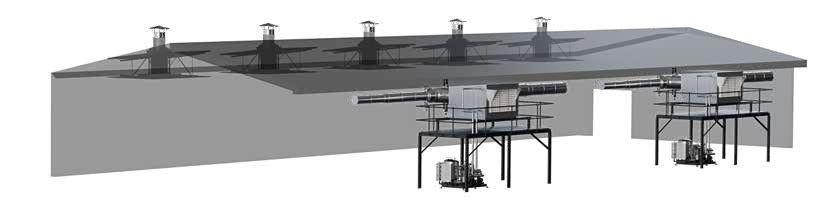
HVS by MEVAS
Mevas’ approach starts from the beginning with many different operations, always tailored to customers’ needs, aiming at a fully customized solution:
1) Process survey: this stage is fundamental to know the machine process characteristics and layout; this is the occasion to take all the necessary measures of the exhaust (Temperature, Moisture Content, Mass Flow) and evaluate the optimal layout without affecting process and maintenance operation.
2) Specific HV survey: Mevas technicians collect data of temperature and moisture at different heights all over the machine hall; this stage helps us to create an accurate map of critical areas, understand the existing situation and elaborate the most effective solution.
3) Mass balance and air turns calculation: Using the collected data, we calculate the correct mass balance and the air turns needed for an efficient HVS. When the correct air mass flow to be heated up is calculated, you need energy sources.
4) Technical solution: Based on these preliminary points, we define the best customized technical solution. This involves which source could be used, how many air turns are needed, sizing and specification of components, ducts and general layout.
The different energy sources that could be recovered and destined to our HV System are:
- Exhaust recovery through Air/Water exchanger or Scrubber.
- Exhaust recovery through Air/Air exchanger.
- Condensate.
- Flash steam.
- Hot water and hot air from cogeneration.
- Live steam (last option, usually as back-up).
5) Integration with other systems or multiple HV: Mevas can integrate different systems to achieve an overall optimal situation through a comprehensive approach. For example: the combination of Mist Removal System and HVS or the integration in a single Air System of multiple Hall Ventilations (as R2 for Hall Ventilation – Scrubber for process water and R3 for converting/warehouse ventilation).
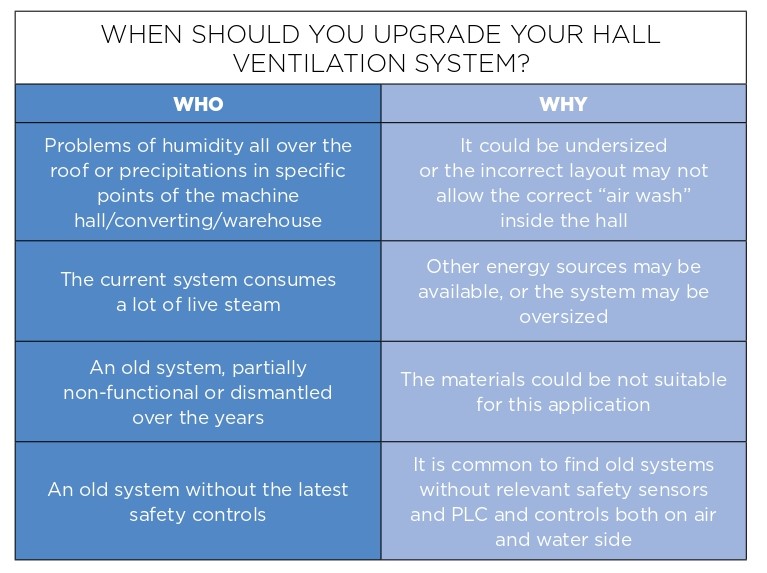
In conclusion, an efficient and right-sized HVS is fundamental to maintain high production quality and safety standards, avoiding unexpected long shutdowns.