
The construction of a new plant requires advanced engineering studies by the manufacturer, who must carefully evaluate the customer’s production requirements to propose modern and efficient solutions.
This same level of attention is required when machinery needs to be upgraded or improved, whether to face new production challenges or to replace equipment that has reached the end of its life cycle or features obsolete technology.
In both cases, it is essential for the manufacturing company to have a competent technical staff and a qualified engineering department, capable of delivering a high-quality product with performance aligned with market demands.
In recent years, POLIMEK has structured its technical team by focusing on personnel training and process development, fully utilizing the Functional Mechanical Design (P.M.F.) program.
Project development must necessarily begin with the correct interpretation of the customer’s needs.
Customers often present requests they cannot clearly define; hence the importance of a technical staff that, through experience, can translate these needs into a well-structured project.
Thanks to its engineers and the success of hundreds of installations, Polimek can optimally interpret customer information, oversee development and conclude projects with success and satisfaction.
Fundamental elements often considered as secondary
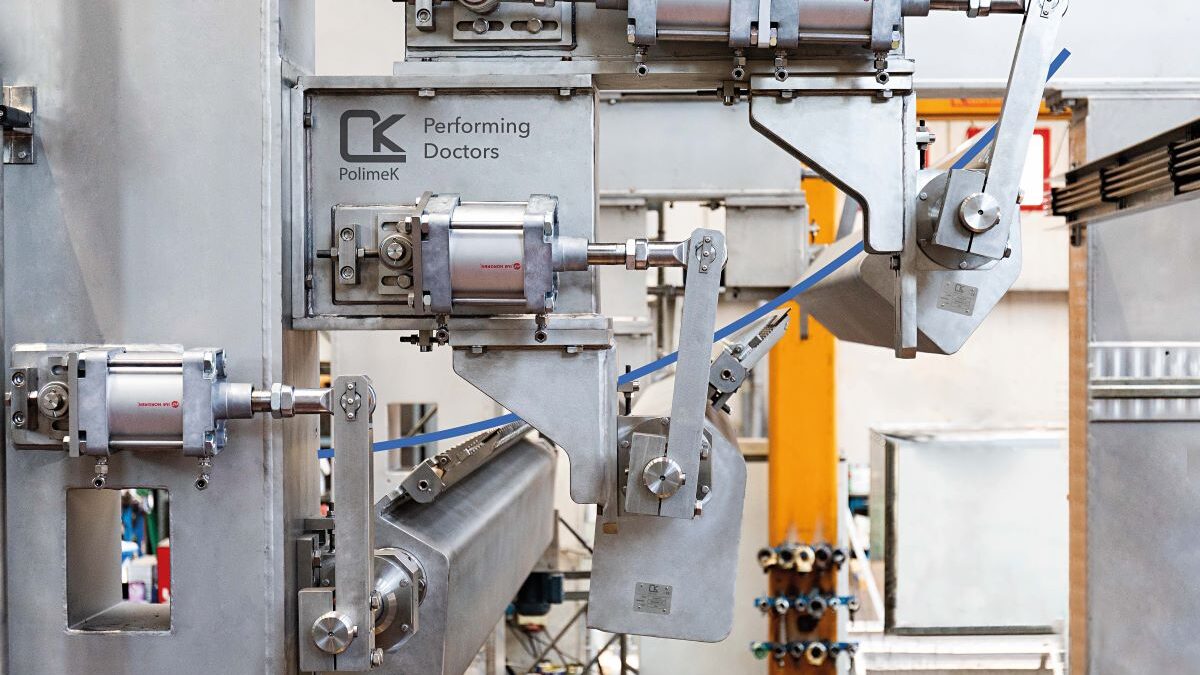
A recurring error when modernizing a paper machine is considering doctoring systems as complementary rather than essential elements. Generally, appropriate attention is given to the fundamental doctors of the paper machine, such as those installed on the breast roll, the press section and the Yankee cylinders in tissue machines.
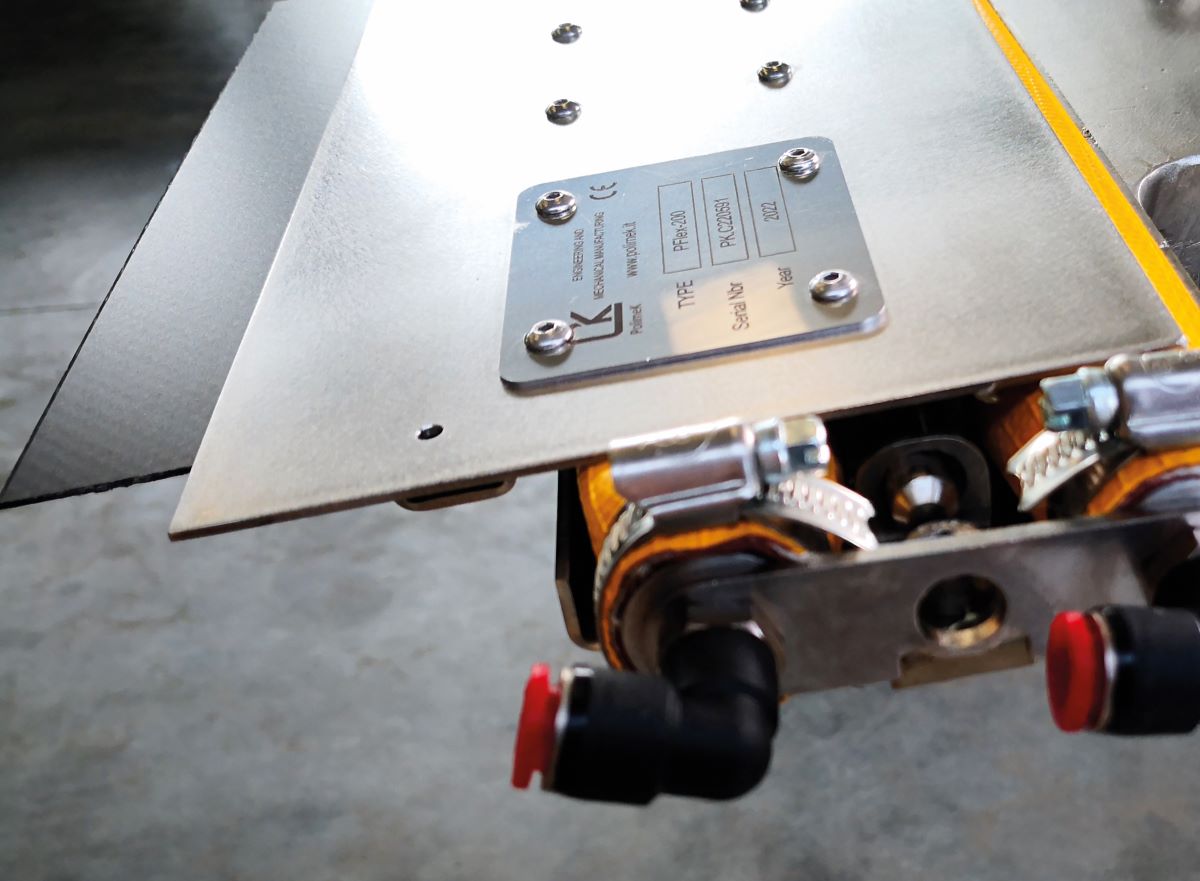
However, the doctors for simple rolls and dryer cylinders are often overlooked, despite their fundamental role in reducing sheet breaks and contributing to overall paper quality. Polimek’s PFlex-200 and PFlex-300 doctoring systems are flexible, double-membrane types that significantly improve cylinder cleaning while remaining simple to install and maintain.
“MTS” in the design of a doctoring system

According to the principles introduced by Taguchi in the MTS (Mahalanobis-Taguchi System) method, it is essential to identify critical process parameters through experiments and verification of previous installations.
New supplies are dimensioned so that overlooked external variables do not compromise the operation of the doctoring system.
The design of an individual doctor is analyzed across its multiple components. Specifically, the study of the support beam is evaluated using Taguchi’s Robust Design methodology to ensure it meets all required mechanical characteristics – such as stiffness and deflection – and remains as insensitive as possible to external influences that cannot be fully assessed during the engineering phase.
The influences that typically challenge the dynamic behaviour of a beam are vibrational, mostly caused by mechanical issues in components external to the doctor group or generated by unwanted friction due to the coating.
Creping system engineering
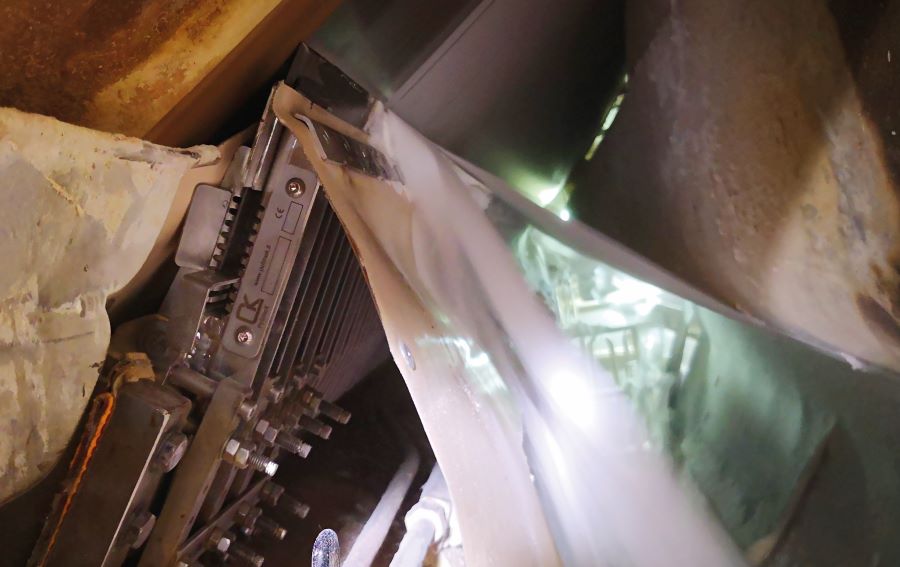
Among all types of doctors in a Tissue machine, the creping blade is by far the most important and complex to manufacture, both from a mechanical standpoint and due to the careful dynamic considerations required during the design phase.
- New installations: The machine manufacturer provides the Polimek team with the production parameters and the performance targets the creping doctor must achieve.
- Replacements: When replacing an existing creping system, Polimek technicians conduct an on-site inspection to verify production parameters and perform a vibration analysis of the Yankee area to identify critical frequencies for the design phase.
The PCrep-400 flexible creping system meets the most demanding market requirements regarding self-profiling, paper mechanical characteristics, and blade stick-out variability.