Packaging papers are produced using a paper machines, known as “continuous machines” operating at speeds of up to 1,200 m/min with a sheet width up to 10 meters. These machines are designed to perform two primary functions: transferring and drying the sheet as it passes through multiple rolls and drying cylinders with a standard diameter of 1.5 meters.
The need to install a significant number of drying cylinders forces manufacturers to build machines exceeding 250 meters in length.

Technical Department.
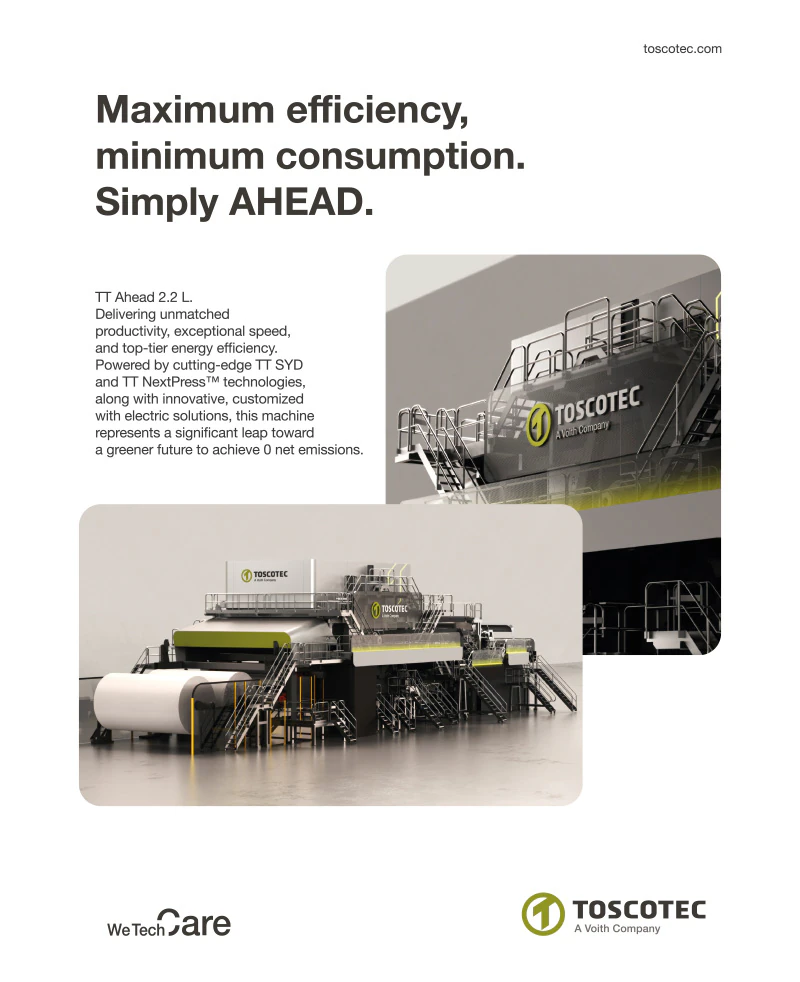
The complexity of a paper machine mainly lies in its size, whereas in tissue production the critical component is the process speed. Tissue machines produce sheets with widths of approximately
6 meters at speeds exceeding 120 km/h. In this case, sheet drying is ensured by a single heated roll, known as the Yankee cylinder, which can reach a diameter of 5.5 meters. Both processes share the extensive use of water in sheet production, primarily for breaking down raw materials into smaller portions until floating fibres are obtained. Water is also essential for fibre distribution during sheet formation and its transfer throughout the machine. The required water quantity depends on the type of raw material used – whether recycled paper, virgin pulp or a mix of both – as well as the final product type. Although the water-to-paper ratio appears extremely high, at 99:1 (meaning nearly 100 litres of water are needed to produce 1 kg of paper), it is important to note that a significant portion of the water is recovered and reintroduced into the process, some is evaporated and the remainder is filtered and treated before being returned to the source. From this perspective, a paper machine primarily functions to remove water from a highly diluted pulp and compact the fibres into a uniform sheet.
30 years experience in manufacturing and service any type of doctoring system
Water removal in tissue machines
In tissue machines, water removal occurs in two successive stages: pressing and drying. The pressing phase is a mechanical process involving the contact between a suction press roll and the Yankee cylinder. Drying takes place as the sheet is transferred from the Yankee cylinder surface, heated to 180 °C, to the pope reel drum, where the final paper roll is formed. If the pressing phase is not optimized, additional heat is required to remove water from the sheet or it becomes necessary to reduce the machine speed, allowing the sheet to remain in contact with the hot Yankee surface for a longer time. Both scenarios lead to increased energy consumption and reduced machine efficiency.
The importance of the suction press and doctoring system
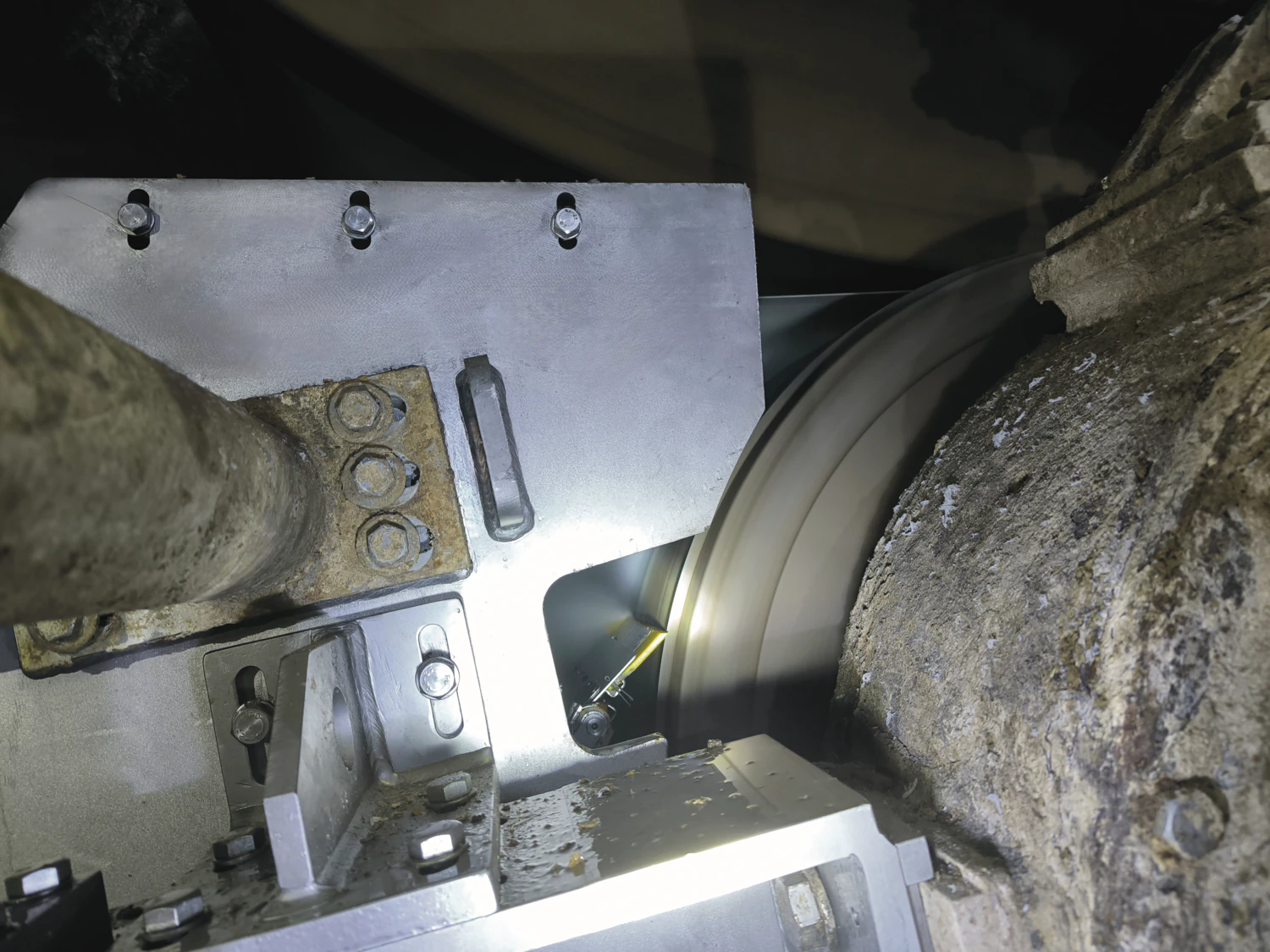
The suction press roll is a drilled cylinder with an internal vacuum, generated by an external pump, which extracts water squeezed out during its contact with the Yankee cylinder.
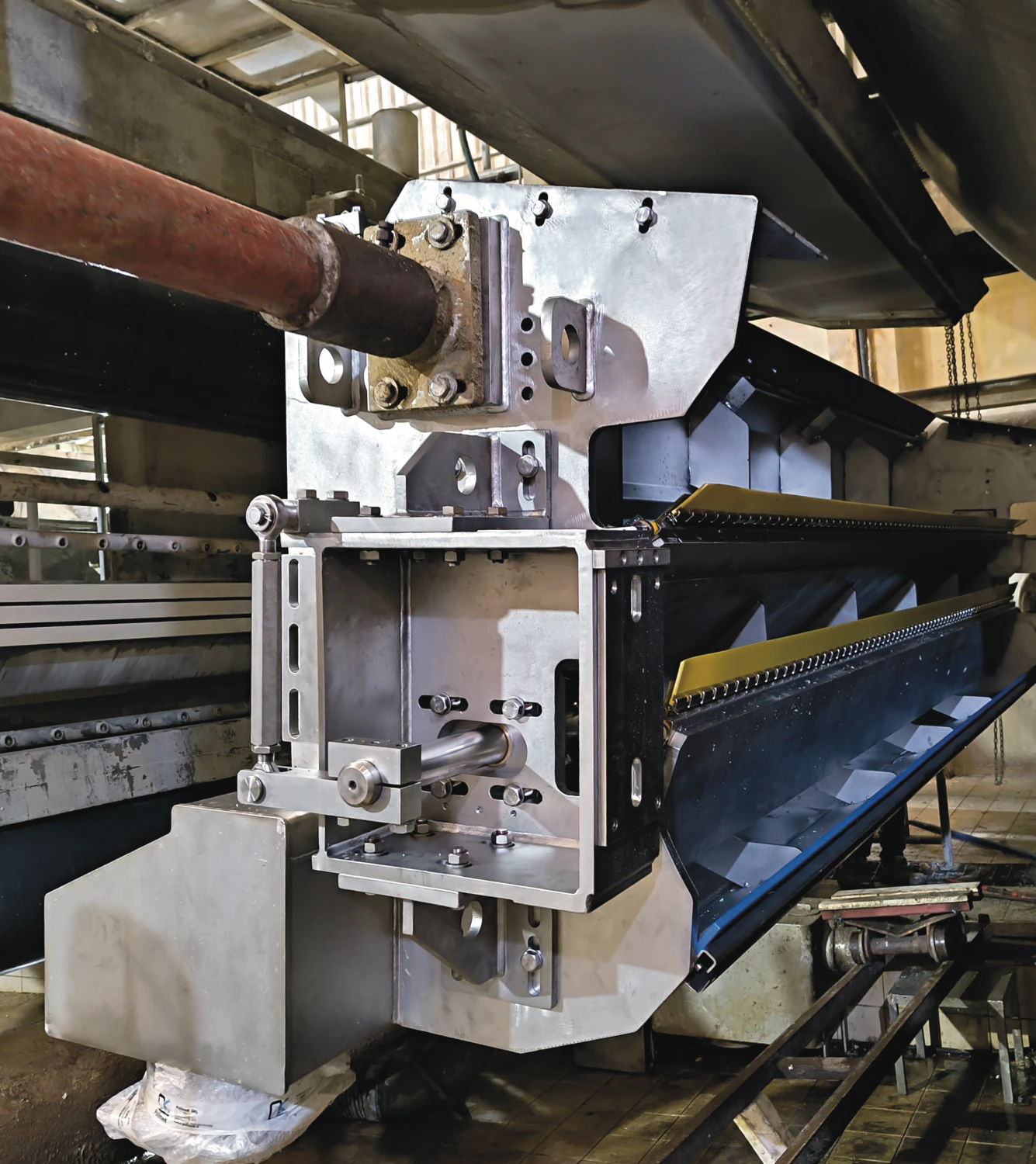
The key component of the press section is the doctoring system, which removes excess water from the press roll surface. With over 30 years of experience in doctoring engineering, POLIMEK has developed an innovative doctoring system for press section, able to increasing the dry content of the sheet by up to 1%.
Each installation is designed and developed to meet the needs of the customer
PFlex-200: a new generation of doctor blade holders
The new PFlex-200 doctor blade holders efficiently remove greater amounts of water compared to traditional systems, thanks to controlled blade load distribution. A complete doctoring system for a suction press includes:
- A collecting save-all tray with upper and lower sealing systems.
- A double doctoring system with PFlex-200 blade holders featuring independent adjustment of the working angle.
- Two lateral water discharge outlets of appropriate dimensions.
Thanks the equal blade load an important result in the use of the PFlex-200 blade holders is the improvement of the humidity profile on the paper sheet.